
Is Cyberleek Legal? Copyright, Leaks and Your Exposure
Downloading or running the leaked GTA 6 build is not legal in the major markets we examined. Here is how copyright, anti-circumvention and enforcement apply.
This is general information, not legal advice. The short version: downloading, reproducing or running the leaked GTA 6 build is very likely unlawful in the United States, the United Kingdom, the European Union, Canada and Australia. The fact that a file is available does not make it legal to use. This page explains the legal theories and why the leak's status is not a loophole. For the practical safety side, see is Cyberleek safe→.
The GTA 6 build is copyrighted software distributed without authorisation. Copying it, sharing it or making a modified version generally infringes copyright, and bypassing technical protection may violate anti-circumvention rules. Personal use is not a universal defence.
Copyright basics
Video games are protected as computer programs and as audiovisual works. Copyright owners have exclusive rights to reproduce the work, distribute copies, prepare derivative works and publicly perform it. Downloading a leaked build creates a copy. Sharing it distributes copies. Patching or recompiling it can create a derivative work.
Those rights are territorial. The specific statute and remedies depend on where you are and where the conduct occurs. But the core principle is shared across the Berne Convention signatories: unauthorised reproduction and distribution are infringement unless an exception applies.
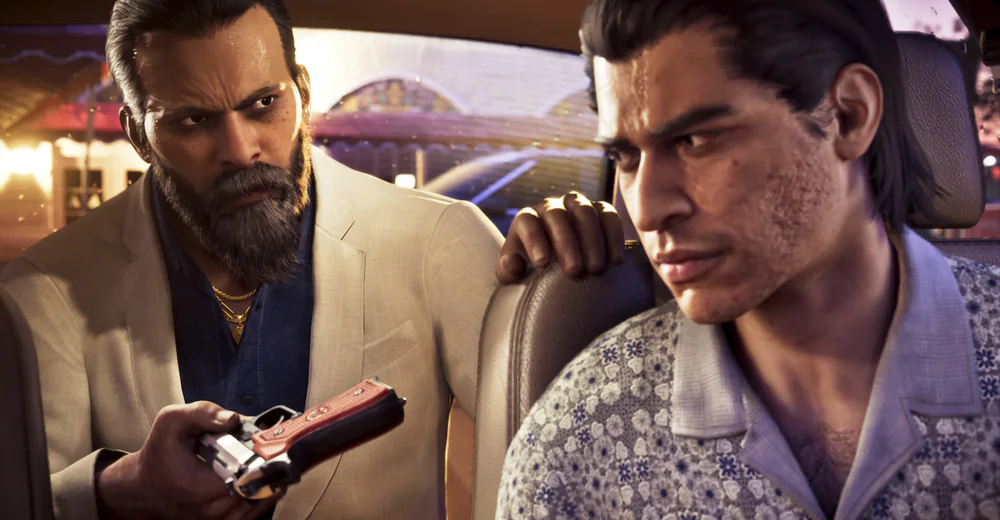
Image: Rockstar Games. Official GTA VI press screenshot.
The United States
In the US, the Copyright Act gives the owner the right to reproduce, distribute and prepare derivative works. Infringement can lead to statutory damages, actual damages and injunctions. Willful infringement can carry higher statutory awards.
The Digital Millennium Copyright Act adds a separate layer. Section 1201 prohibits circumventing technological measures that control access to a copyrighted work, and prohibits trafficking in circumvention tools. A leaked console build may involve bypassed protections, and recompilation projects can raise questions under this section.
Fair use is a defence, not a permission slip. Courts weigh purpose, nature, amount and market effect. Copying an entire commercial game to play it is very different from quoting a few seconds for commentary. The fair-use analysis for a full build is weak.
The United Kingdom
The Copyright, Designs and Patents Act 1988 protects computer programs as literary works. Infringement includes copying and communicating the work to the public. The UK also implements anti-circumvention protections under the EU-derived rules retained in domestic law.
UK enforcement can be civil or criminal depending on scale. A single download is less likely to attract prosecution than commercial distribution, but it is still an infringing act. The UK does not have a general "personal use" exception for downloading commercial games.
The European Union
EU law protects computer programs under the Software Directive and the InfoSoc Directive. Temporary copies that are incidental to a lawful use may be exempt, but downloading an unauthorised build is not a lawful use.
The Software Directive permits observing, studying and testing a program to understand its ideas, and permits decompilation for interoperability under narrow conditions. Those exceptions do not authorise making a playable copy of a commercial game or distributing a modified build.
Canada and Australia
Canada's Copyright Act protects computer programs and provides a private copying regime for audio recordings, not for video games. Australia's Copyright Act protects computer programs as literary works and includes anti-circumvention provisions.
Both countries have fair dealing exceptions for research, criticism and news reporting. Those exceptions are narrower than many people assume and do not cover playing a leaked commercial game.
Why the leak is not a loophole
Some argue that a leak is already "out there," so downloading it changes nothing. Legally, each copy is a separate reproduction. The availability of an infringing copy does not authorise new copies.
Others argue that the build is unfinished or not for sale, so there is no market harm. Copyright protects the work regardless of commercial availability, and the owner's right to control distribution includes the right to withhold it.
A third argument is that recompiling is "just code." The recompiled binary still embodies the original program and, in a full port, the original assets. Transforming the format does not erase the copyright.
What the publisher is doing
Take-Two has been active. In August 2026 it served DMCA subpoenas on Microsoft, Discord and X seeking records that could identify the person behind the Cyberleek handle. The subpoenas cited a GitHub repository that hosted leaked content. That shows a willingness to pursue both platforms and individuals.
The publisher has also issued takedowns against repositories and servers. A 404 is not a legal ruling, but it is evidence of enforcement pressure. For the project history, see Leonida project GitHub→.
Giving the files away for free does not make distribution lawful. Non-commercial infringement can still be actionable, and it can still support injunctions and statutory damages.
What is lawful
Buying and playing the console version is lawful. Streaming your own console to a PC is lawful. Reading reporting, watching analysis and studying open-source recompilation tools are lawful. Discussing the leak is not the same as distributing it.
If you are considering a project that uses leaked code or assets, talk to a lawyer in your jurisdiction. Do not rely on forum consensus or on the fact that a repository is still online.
FAQ
Is downloading a leaked game illegal?
In most major markets, yes. It creates an unauthorised copy of a copyrighted work. Criminal enforcement varies, but civil liability does not require a criminal case.
Is it legal to recompile a game I own?
Owning a copy does not automatically authorise creating a new build or distributing it. Narrow interoperability exceptions exist, but they do not cover making and sharing a playable port of a commercial game.
Can I be sued for downloading one file?
Anyone can file a claim, but practical risk depends on scale, jurisdiction and the owner's enforcement priorities. Publishers often target distributors first. That does not make a single download lawful.
Does a DMCA takedown mean the project was illegal?
Not necessarily. A takedown is a claim by a rights holder, not a court decision. It does show that the rights holder considers the use infringing and is willing to act.
Official source: US Copyright Office: DMCA Section 1201 ↗
Sources